
Development, Entertainment, and the Forgotten Necessity of Food Production
Why Southern States Must Balance Economic Growth with Food Security, Farmland Preservation, and Agricultural Resilience
A recent Southern Ag Today report highlights a troubling reality facing the specialty crop industry. Over the last decade, harvested vegetable acreage has declined, citrus production has been devastated by disease pressures, and growers continue to face rising labor and production costs while competing against increasing imports.
For those of us living in the South, these trends should provoke a larger conversation—not simply about agriculture, but about public priorities.
Consider Georgia.
Agriculture remains the state’s largest industry. According to the 2026 Georgia Agricultural Impact Report, Georgia agriculture generated more than $18 billion in direct farm-gate value and contributes more than $100 billion annually to the state’s economy while supporting over 370,000 jobs. Nearly 10 million acres of Georgia land remain in agricultural production.
Yet at the same time, Georgia is experiencing an unprecedented wave of entertainment, tourism, and mixed-use development investment.
Downtown Atlanta’s Centennial Yards redevelopment carries an estimated value of approximately $5 billion and is being marketed as one of the Southeast’s premier entertainment districts ahead of the FIFA World Cup.
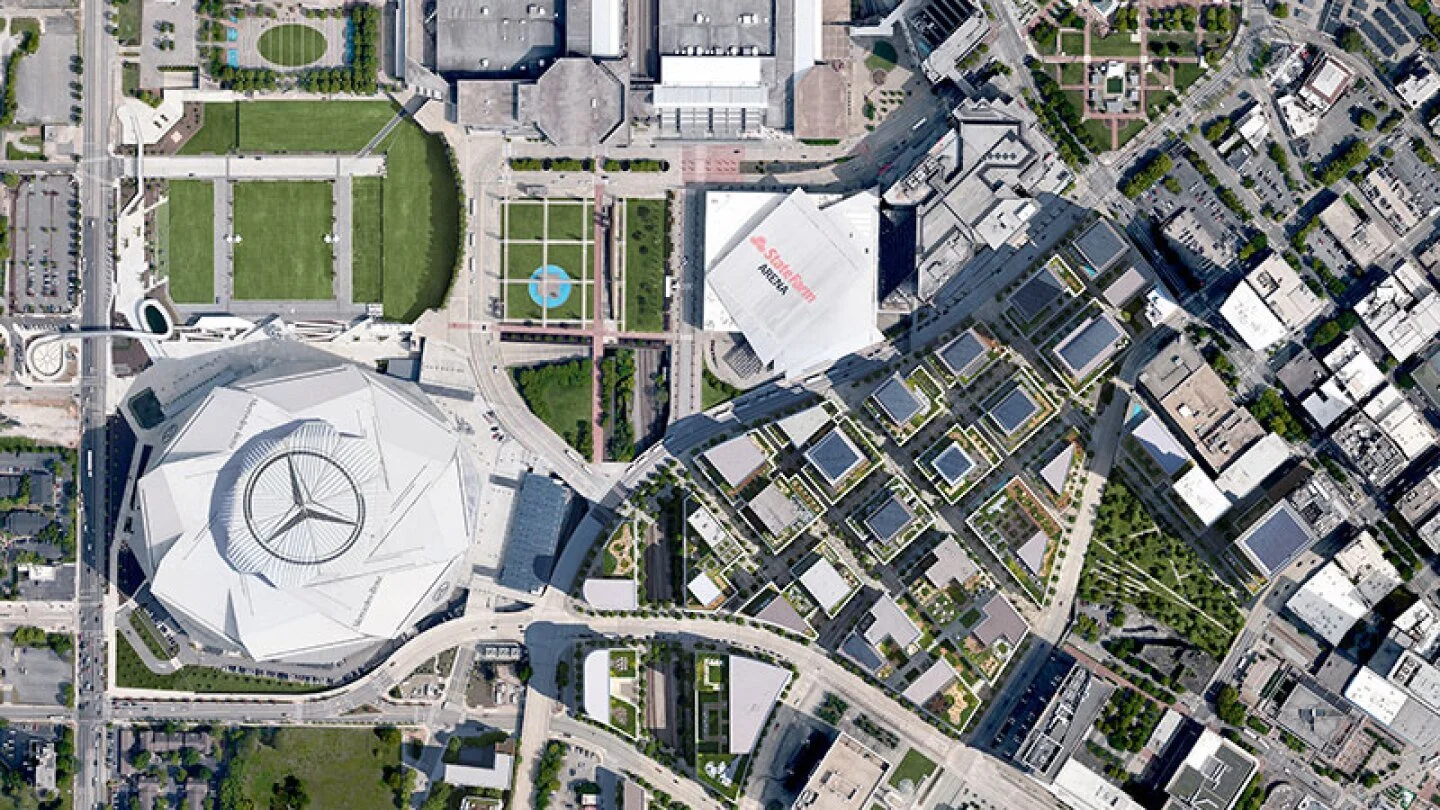
Aerial view of Centennial Yards development.
Just south of downtown, the newly announced Forge Atlanta project represents a multi-phase mixed-use development projected to generate $7.37 billion in economic impact and include hotels, luxury housing, entertainment venues, retail space, and public gathering areas.
In Forsyth County, “The Gathering” development is moving forward as a $3 billion entertainment-focused project centered around a proposed professional sports arena and mixed-use district.
Meanwhile, public agencies and private partners have invested millions preparing Atlanta for the 2026 FIFA World Cup. Federal officials alone allocated more than $100 million in transit funding to World Cup host cities to support transportation and visitor infrastructure. Host cities across the country have also reported substantial security, logistics, and operational costs associated with hosting the event.
None of these investments are inherently bad. Cities need economic development. Tourism creates jobs. Entertainment districts generate tax revenue. Major sporting events can elevate a city’s global profile.
The question is not whether these projects should exist.
The question is whether food production receives the same urgency, imagination, and long-term investment.
When was the last time a state announced a multi-billion-dollar initiative to preserve farmland?
When was the last time agricultural workforce shortages dominated legislative sessions with the same intensity as discussions surrounding tourism, sports, or commercial real estate?
When specialty crop growers struggle to find labor, battle disease pressures, absorb higher production costs, and compete against imports, the consequences extend far beyond farm profitability. They affect food prices, food availability, rural employment, and ultimately our food security.
The irony is difficult to ignore.
Georgia’s largest industry feeds every resident every day, yet the headlines are often dominated by entertainment districts, luxury developments, and global sporting events. Agriculture rarely receives ribbon cuttings. Farms do not generate viral social media campaigns. Food security lacks the glamour of a skyline rendering.
But if recent supply chain disruptions, fertilizer shortages, and food inflation have taught us anything, it is that food production is not merely another sector of the economy.
It is critical infrastructure!
We invest heavily in roads because transportation matters.
We invest heavily in power generation because energy matters.
We invest heavily in broadband because connectivity matters.
Shouldn’t we invest with the same urgency in the systems that produce our food?
The challenge before us is not choosing between development and agriculture. The challenge is redefining development itself.
A truly prosperous Southern economy should be measured not only by the cranes on the horizon but also by the farms still operating beneath them. It should be measured by how well we preserve productive farmland, support agricultural innovation, strengthen rural economies, and ensure future generations can continue producing food close to home.
Because at the end of the day, no entertainment district, luxury tower, or international sporting event can replace the value of a secure and resilient food supply.
